In Brief

In Brief–Fall 2026

Franciscan Magazine Homepage > Fall 2026 > In Brief–Fall 2026


In Brief

In Brief–Fall 2026

A look at recent news from the Franciscan University community.

Fall 2026


In This Article

Franciscan Honors Inaugural Be Light Faculty Fellows

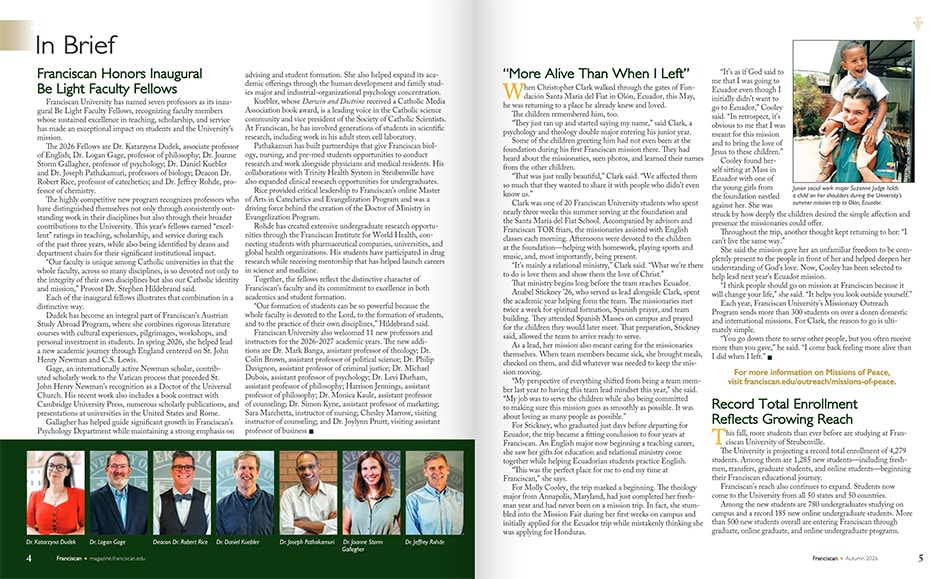
Franciscan University has named seven professors as its inaugural Be Light Faculty Fellows, recognizing faculty members whose sustained excellence in teaching, scholarship, and service has made an exceptional impact on students and the University’s mission.

The 2026 Fellows are Dr. Katarzyna Dudek, associate professor of English; Dr. Logan Gage, professor of philosophy; Dr. Joanne Storm Gallagher, professor of psychology; Dr. Daniel Kuebler and Dr. Joseph Pathakamuri, professors of biology; Deacon Dr. Robert Rice, professor of catechetics; and Dr. Jeffrey Rohde, professor of chemistry.

The highly competitive new program recognizes professors who have distinguished themselves not only through consistently outstanding work in their disciplines but also through their broader contributions to the University. This year’s fellows earned “excellent” ratings in teaching, scholarship, and service during each of the past three years, while also being identified by deans and department chairs for their significant institutional impact.

“Our faculty is unique among Catholic universities in that the whole faculty, across so many disciplines, is so devoted not only to the integrity of their own disciplines but also our Catholic identity and mission,” Provost Dr. Stephen Hildebrand said.

Each of the inaugural fellows illustrates that combination in a distinctive way.

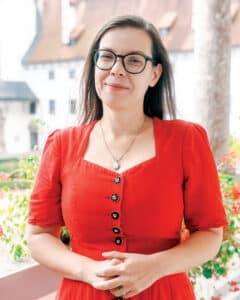
Dudek has become an integral part of Franciscan’s Austrian Study Abroad Program, where she combines rigorous literature courses with cultural experiences, pilgrimages, workshops, and personal investment in students. In spring 2026, she helped lead a new academic journey through England centered on St. John Henry Newman and C.S. Lewis.


Portrait of Dr. Katarzyna Dudek wearing glasses and a red dress outdoors.

Dr. Katarzyna Dudek


Dudek has become an integral part of Franciscan’s Austrian Study Abroad Program, where she combines rigorous literature courses with cultural experiences, pilgrimages, workshops, and personal investment in students. In spring 2026, she helped lead a new academic journey through England centered on St. John Henry Newman and C.S. Lewis.

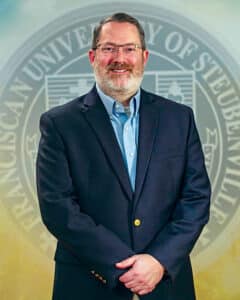
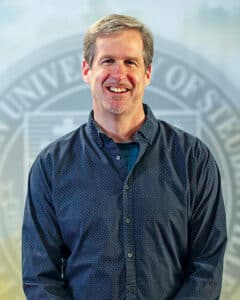
Portrait of Dr. Logan Gage in front of the university seal.

Dr. Logan Gage


Gage, an internationally active Newman scholar, contributed scholarly work to the Vatican process that preceded St. John Henry Newman’s recognition as a Doctor of the Universal Church. His recent work also includes a book contract with Cambridge University Press, numerous scholarly publications, and presentations at universities in the United States and Rome.

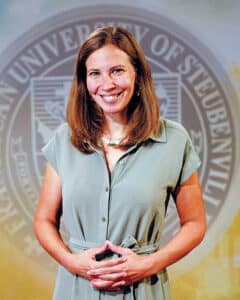
Portrait of Dr. Joanne Storm Gallagher in front of the university seal.

Dr. Joanne Storm Gallagher


Gallagher has helped guide significant growth in Franciscan’s Psychology Department while maintaining a strong emphasis on advising and student formation. She also helped expand its academic offerings through the human development and family studies major and industrial-organizational psychology concentration.

Portrait of Dr. Daniel Kuebler in front of the university seal.

Dr. Daniel Kuebler


Kuebler, whose Darwin and Doctrine received a Catholic Media Association book award, is a leading voice in the Catholic science community and vice president of the Society of Catholic Scientists. At Franciscan, he has involved generations of students in scientific research, including work in his adult stem cell laboratory.

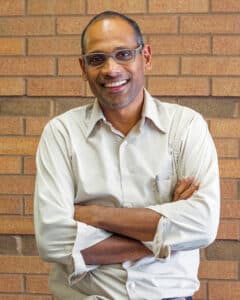
Portrait of Dr. Joseph Pathakamuri wearing glasses and standing with his arms crossed.

Dr. Joseph Pathakamuri


Pathakamuri has built partnerships that give Franciscan biology, nursing, and pre-med students opportunities to conduct research and work alongside physicians and medical residents. His collaborations with Trinity Health System in Steubenville have also expanded clinical research opportunities for undergraduates.

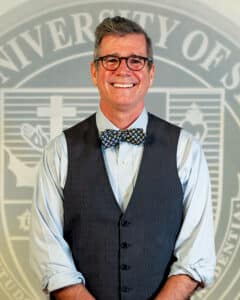
Portrait of Dr. Bob Rice wearing glasses, a bow tie, and a vest in front of the university seal.

Deacon Dr. Robert Rice


Rice provided critical leadership to Franciscan’s online Master of Arts in Catechetics and Evangelization Program and was a driving force behind the creation of the Doctor of Ministry in Evangelization Program.

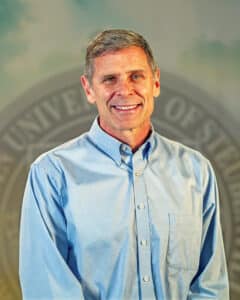
Portrait of Dr. Jeffrey Rohde wearing a light blue button-down shirt in front of the university seal.

Dr. Jeffrey Rohde


Rohde has created extensive undergraduate research opportunities through the Franciscan Institute for World Health, connecting students with pharmaceutical companies, universities, and global health organizations. His students have participated in drug research while receiving mentorship that has helped launch careers in science and medicine.

Together, the fellows reflect the distinctive character of Franciscan’s faculty and its commitment to excellence in both academics and student formation.

“Our formation of students can be so powerful because the whole faculty is devoted to the Lord, to the formation of students, and to the practice of their own disciplines,” Hildebrand said.

Franciscan University also welcomed 11 new professors and instructors for the 2026-2027 academic years. The new additions are Dr. Mark Banga, assistant professor of theology; Dr. Colin Brown, assistant professor of political science; Dr. Philip Davignon, assistant professor of criminal justice; Dr. Michael Dubois, assistant professor of psychology; Dr. Levi Durham, assistant professor of philosophy; Harrison Jennings, assistant professor of philosophy; Dr. Monica Kaule, assistant professor of counseling; Dr. Simon Kyne, assistant professor of marketing; Sara Marchetta, instructor of nursing; Chesley Marrow, visiting instructor of counseling; and Dr. Joylynn Pruitt, visiting assistant professor of business.

“More Alive Than When I Left”

When Christopher Clark walked through the gates of Fundación Santa María del Fiat in Olón, Ecuador, this May, he was returning to a place he already knew and loved.

The children remembered him, too.

“They just ran up and started saying my name,” said Clark, a psychology and theology double major entering his junior year. Some of the children greeting him had not even been at the foundation during his first Franciscan mission there. They had heard about the missionaries, seen photos, and learned their names from the other children.

“That was just really beautiful,” Clark said. “We affected them so much that they wanted to share it with people who didn’t even know us.”

Clark was one of 20 Franciscan University students who spent nearly three weeks this summer serving at the foundation and the Santa María del Fiat School. Accompanied by advisors and Franciscan TOR friars, the missionaries assisted with English classes each morning. Afternoons were devoted to the children at the foundation—helping with homework, playing sports and music, and, most importantly, being present.

“It’s mainly a relational ministry,” Clark said. “What we’re there to do is love them and show them the love of Christ.”

That ministry begins long before the team reaches Ecuador.

Anabel Stickney ’26, who served as lead alongside Clark, spent the academic year helping form the team. The missionaries met twice a week for spiritual formation, Spanish prayer, and team building. They attended Spanish Masses on campus and prayed for the children they would later meet. That preparation, Stickney said, allowed the team to arrive ready to serve.

As a lead, her mission also meant caring for the missionaries themselves. When team members became sick, she brought meals, checked on them, and did whatever was needed to keep the mission moving.

“My perspective of everything shifted from being a team member last year to having this team lead mindset this year,” she said. “My job was to serve the children while also being committed to making sure this mission goes as smoothly as possible. It was about loving as many people as possible.”

For Stickney, who graduated just days before departing for Ecuador, the trip became a fitting conclusion to four years at Franciscan. An English major now beginning a teaching career, she saw her gifts for education and relational ministry come together while helping Ecuadorian students practice English.

“This was the perfect place for me to end my time at Franciscan,” she says.
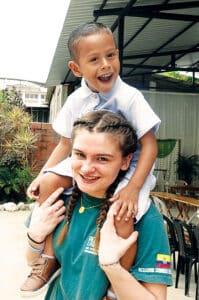
Suzanne Judge carrying a young boy on her shoulders while outdoors.

Junior social work major Suzanne Judge holds a child on her shoulders during the University’s summer mission trip to Olón, Ecuador.

For Molly Cooley, the trip marked a beginning. The theology major from Annapolis, Maryland, had just completed her freshman year and had never been on a mission trip. In fact, she stumbled into the Mission Fair during her first weeks on campus and initially applied for the Ecuador trip while mistakenly thinking she was applying for Honduras.

“It’s as if God said to me that I was going to Ecuador even though I initially didn’t want to go to Ecuador,” Cooley said. “In retrospect, it’s obvious to me that I was meant for this mission and to bring the love of Jesus to these children.”

Cooley found herself sitting at Mass in Ecuador with one of the young girls from the foundation nestled against her. She was struck by how deeply the children desired the simple affection and presence the missionaries could offer.

Throughout the trip, another thought kept returning to her: “I can’t live the same way.”

She said the mission gave her an unfamiliar freedom to be completely present to the people in front of her and helped deepen her understanding of God’s love. Now, Cooley has been selected to help lead next year’s Ecuador mission.

“I think people should go on mission at Franciscan because it will change your life,” she said. “It helps you look outside yourself.”

Each year, Franciscan University’s Missionary Outreach Program sends more than 300 students on over a dozen domestic and international missions. For Clark, the reason to go is ultimately simple.

“You go down there to serve other people, but you often receive more than you gave,” he said. “I come back feeling more alive than I did when I left.”

 

For more information on Missions of Peace,

visit franciscan.edu/outreach/missions-of-peace.

Record Total Enrollment Reflects Growing Reach

This fall, more students than ever before are studying at Franciscan University of Steubenville.

The University is projecting a record total enrollment of 4,279 students. Among them are 1,285 new students—including freshmen, transfers, graduate students, and online students—beginning their Franciscan educational journey.

Franciscan’s reach also continues to expand. Students now come to the University from all 50 states and 50 countries.

Among the new students are 780 undergraduates studying on campus and a record 185 new online undergraduate students. More than 500 new students overall are entering Franciscan through graduate, online graduate, and online undergraduate programs.

For Tim Reardon, vice president for Enrollment Management, the continued growth points to something deeper than enrollment trends.

“Despite continued headwinds and skepticism about the value of higher education, Franciscan University is proud to welcome 780 new undergraduate students to Steubenville, and over 500 non-traditional learners to our graduate and online undergraduate programs,” Reardon said. “Our results reinforce what we continue to hear from students and families: Students are searching for more than just a credential or a degree. Students are looking for purpose, an authentic community, intellectual formation, and a deeper understanding of who they are and are called to become.”

Franciscan is also reaching students before college.

Approximately 300 high school students are taking University courses through dual enrollment opportunities, including Franciscan’s partnership with the Chesterton Schools Network. These programs allow students to begin earning college credit while still in high school and introduce them to Franciscan’s approach to Catholic higher education.

For Admissions information, visit franciscan.edu/inquire.

New Master of Arts in Education to Form Catholic Educator-Witnesses

Franciscan University will launch a new Master of Arts in Education Program in May 2027, offering teachers and school leaders advanced professional formation rooted in a distinctly Catholic vision of education

The fully online graduate program is designed to unite professional excellence with a deep understanding of the human person grounded in Christian anthropology. Rather than treating faith as something added onto the work of an educator, the program will help teachers understand how a Catholic worldview can shape everything from curriculum and pedagogy to classroom management and the study of individual academic disciplines.

For Dr. Rebecca Rook ’01, dean of Franciscan University’s School of Professional Programs, the vision behind the program is personal. As an undergraduate, Rook hoped to teach in a Catholic high school.

Although she received strong academic and faith formation, she later recognized how valuable it would have been to receive explicit preparation in applying Christian anthropology and a spiritual vision of education to the practice of teaching.

“Our new Master of Arts in Education Program intentionally seeks to fill this gap—to prepare Catholic educators to provide an education rooted in truth, wisdom, and virtue,” Rook said.

The goal, she explains, is to help teachers cultivate in their students a “sacramental imagination”—the ability to recognize the divine reflected not just in theology but also in history, science, literature, mathematics, and the rest of the curriculum.

The 30-credit program will include coursework in Christian anthropology and education, the history and philosophy of education, catechetics, curriculum and assessment, pedagogy, classroom management, special education, social issues, and practitioner-based educational research. Students will complete the program with a capstone research project addressing a challenge in education.

The online program, which is currently in the final stage of the accreditation process, is designed with working educators in mind, giving students the flexibility to complete coursework on their own schedules. Students will move through the program with the same group of classmates, helping them build relationships and community. Courses will also include opportunities for live discussions with professors and fellow students.

Students may also pursue optional specializations in catechetics and evangelization or Catholic studies, expanding the degree to 36 credits. Those areas emerged through conversations with Catholic teachers and school leaders across the country and reflect Franciscan University’s educational and evangelistic mission.

Ultimately, Rook sees the program as serving something larger than professional advancement.

“The Church needs a new generation of holy, mission-driven educator-witnesses. A new generation of St. Elizabeth Ann Setons, St. John Boscos, and St. Frances Cabrinis, who will labor courageously in the vineyard of the classroom, faithfully mirroring Christ, the perfect teacher,” Rook said.

Oath of Fidelity

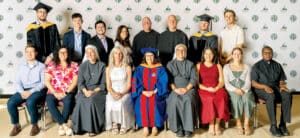
Franciscan University group portrait with faculty, staff, clergy, religious sisters, and graduates in academic attire.

During the new student orientation Mass on August 24, new Franciscan University faculty, staff, and pastoral personnel took the Oath of Fidelity and made the Profession of Faith. Individually, each promised, in both their words and actions, to “always preserve communion with the Catholic Church.”

Franciscan Saint – Servant of God Jane of St. Erasmus (1575–1649)

Living a holy life often doesn’t look flashy. Rather, it involves a thousand hidden moments—preparing your family’s dinner when you don’t feel like it, being patient with a surly coworker, or waking up early to spend a few extra minutes in prayer. Simple, quiet moments are the stones that paved Servant of God Jane of St. Erasmus’ path toward holiness.

Born in 1575, Jane was a daughter of a distinguished family in Belgium. As such, she married into another noble, Catholic family from the Netherlands. Although that family had resisted the Calvinism spreading through the land at the time, her husband, Erasmus, wasn’t perfectly pious. He was a high-ranking military member with a tendency toward gambling and starting violent fights.

Jane sought to quench his fiery nature with gentleness. She helped settle his quarrels, fulfilled her household responsibilities with grace, and extended hospitality to all. She also remained deeply devoted to her relationship with God; during prayer, no earthly things could distract her from talking with her Father.

In time, Jane’s virtue won over her husband. Erasmus decided to make a pilgrimage to the Holy Land and came back a converted man. For her part, Jane started to feel drawn to religious life. Her call was sufficiently tested by spiritual directors, and even the archbishop of Cambrai determined its authenticity.

Erasmus didn’t want to give his wife to the Poor Clares convent in Philippeville, but he eventually consented as an offering to God. Despite being middle-aged, Jane undertook all the same practices of the youngest novices such as walking around barefoot. As acknowledgement of her husband’s sacrifice, she took the name Jane of St. Erasmus and offered her works for the salvation of her husband’s soul.

For 19 years, she lived in the convent. She is said to have had mystical prayer experiences, including levitating in ecstasy, and she had a strong devotion to the Crucified Christ. She died in 1649.

Bookshelf


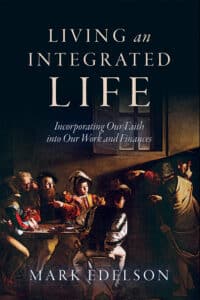
Living an Integrated Life: Incorporating Our Faith Into Our Work and Finances

“Living an Integrated Life: Incorporating Our Faith into Our Work and Finances” by Mark Edelson, with religious artwork on the cover.

Mark Edelson ’14

Palmetto Publishing

As Catholics, we know we’re called to bring our faith into all we do. But in reality, we often treat our careers and bank accounts as if they are separate from what we believe. In his book, financial coach, teacher, and Franciscan alumnus Mark Edelson provides a practical roadmap to help readers better see their work through the lens of faith. He shows how people can co-create through their work, steward their resources well, trust in God’s plan—and ultimately, live a truly integrated life with the Lord.


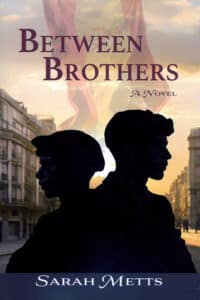
Between Brothers

Sarah (Byrnes ’03) Metts

Book cover for “Between Brothers: A Novel” by Sarah Metts, showing two figures standing back-to-back on a city street.

Bookfox Press

Since alumna Sarah Metts’ family is from Spain, she asked: What was it like for the people—including her own grandmother—who lived through the Spanish Civil War? In her novel Between Brothers, she explores that question with the fictional Jiménez family, a devout Catholic couple and their three children. But when death strikes, the family moves to Madrid in the late 1920s. There, they are swept up in growing political upheaval and violence as they begin to wonder whom they can trust—and if they can stay.


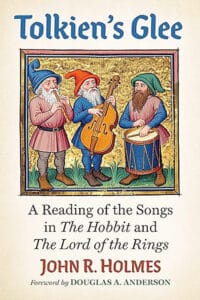
Tolkien’s Glee: A Reading of the Songs in The Hobbit and The Lord of the Rings

Cover of John R. Holmes’ “Tolkien’s Glee,” about the songs in “The Hobbit” and “The Lord of the Rings.”

Dr. John R. Holmes

McFarland

Songs play a prominent role throughout J.R.R. Tolkien’s works, and yet they can be an overlooked part of his epic stories. In Tolkien’s Glee, Franciscan professor emeritus of English Dr. John Holmes examines Tolkien’s verses in his most popular books, The Hobbit and The Lord of the Rings. Holmes carefully breaks down each song, examining its word choices, rhythmic devices, and more. He shows how Tolkien uses verse to enrich his narratives and for everything from expressing joy to eulogizing to sharing cultural memory.


Mary: The Rosary, the Relationship, and Dragons

Dr. Keith Berube ’98 MA ’15

“Mary: The Rosary, the Relationship, and Dragons” by Keith Berubé, with cover art depicting a knight and a woman.Enroute

No matter whether we’re new to the Rosary or we’ve prayed it every day for decades, we can always grow in our devotion to this beautiful prayer. In his book, alumnus and Mariology expert Dr. Keith Berube invites readers to do just that. He portrays the Rosary as an opportunity to talk with a Heavenly Mother who loves us, as well as a powerful weapon against evil. Ultimately, he invites readers to grow closer to Mary—and therefore, her Son.

Go to Top