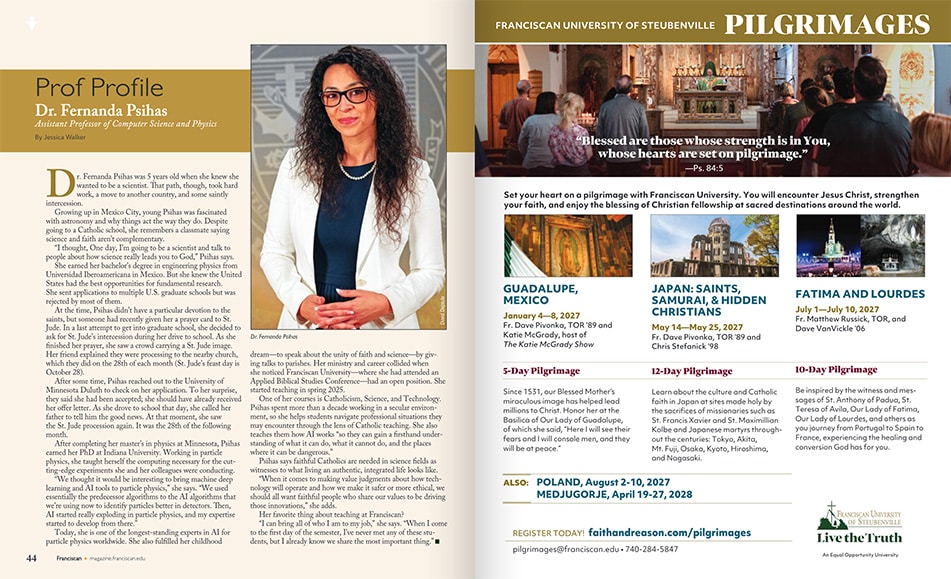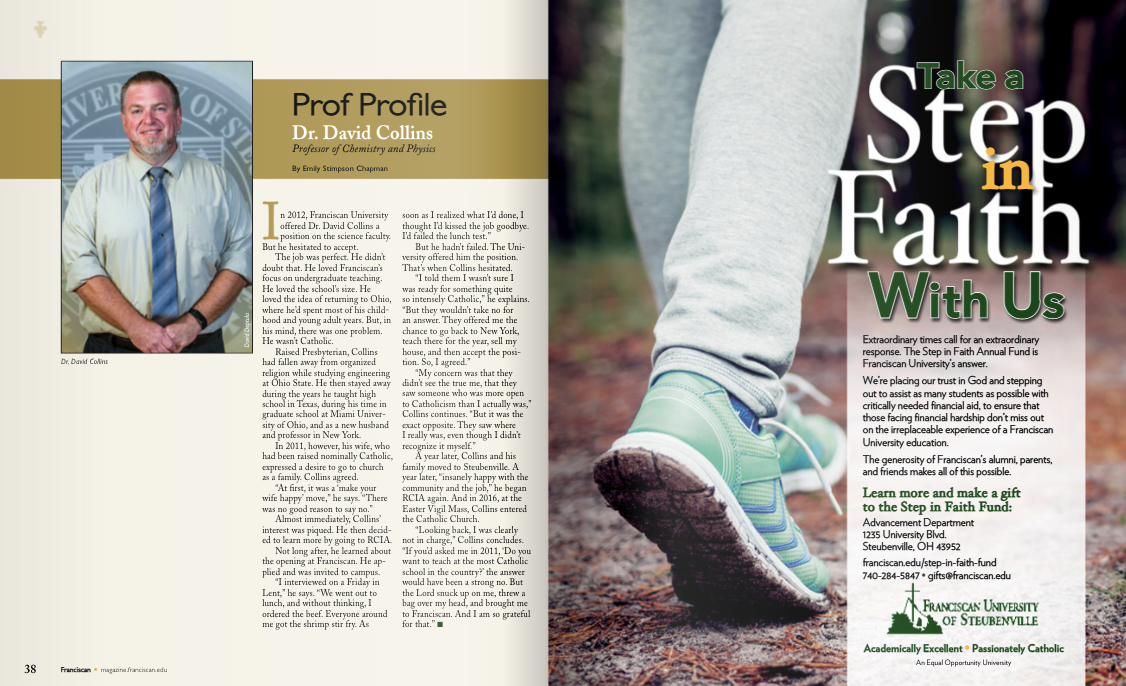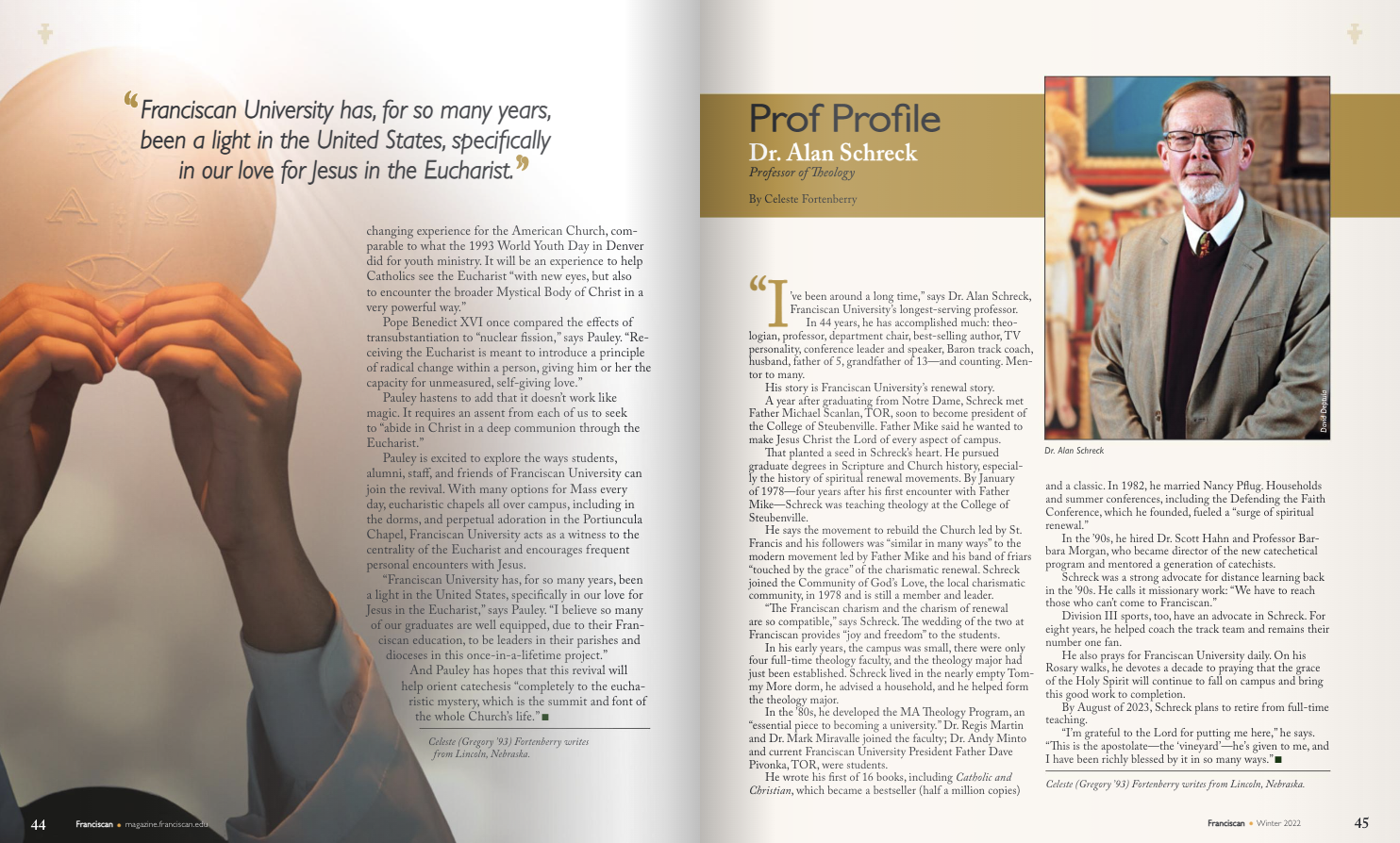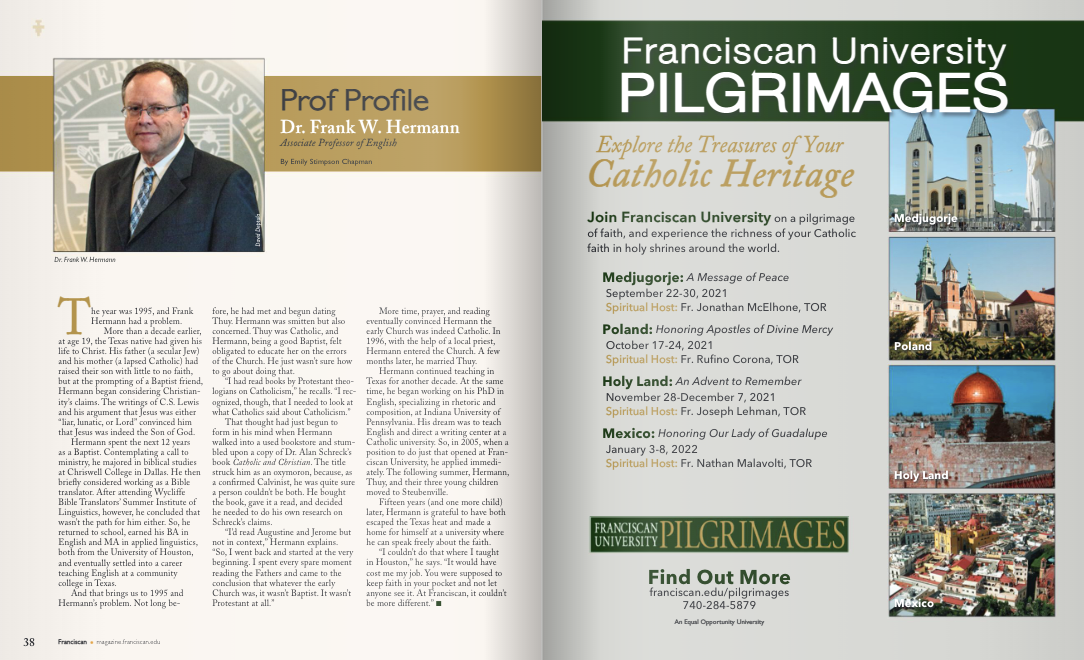
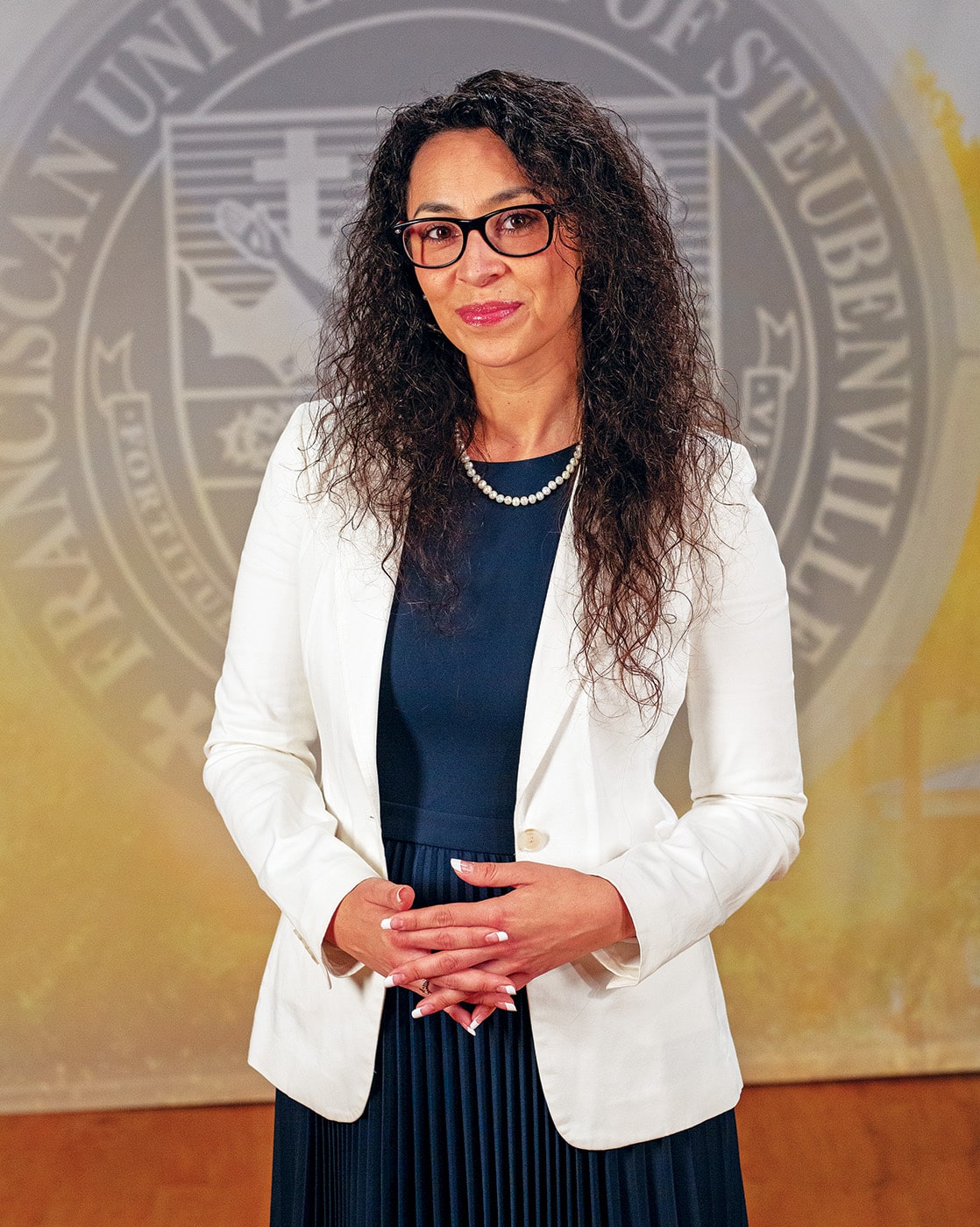
Dr. Fernanda Psihas was 5 years old when she knew she wanted to be a scientist. That path, though, took hard work, a move to another country, and some saintly intercession.
Growing up in Mexico City, young Psihas was fascinated with astronomy and why things act the way they do. Despite going to a Catholic school, she remembers a classmate saying science and faith aren’t complementary.
“I thought, One day, I’m going to be a scientist and talk to people about how science really leads you to God,” Psihas says.
She earned her bachelor’s degree in engineering physics from Universidad Iberoamericana in Mexico. But she knew the United States had the best opportunities for fundamental research. She sent applications to multiple U.S. graduate schools but was rejected by most of them.
At the time, Psihas didn’t have a particular devotion to the saints, but someone had recently given her a prayer card to St. Jude. In a last attempt to get into graduate school, she decided to ask for St. Jude’s intercession during her drive to school. As she finished her prayer, she saw a crowd carrying a St. Jude image. Her friend explained they were processing to the nearby church, which they did on the 28th of each month (St. Jude’s feast day is October 28).
After some time, Psihas reached out to the University of Minnesota Duluth to check on her application. To her surprise, they said she had been accepted; she should have already received her offer letter. As she drove to school that day, she called her father to tell him the good news. At that moment, she saw the St. Jude procession again. It was the 28th of the following month.
After completing her master’s in physics at Minnesota, Psihas earned her PhD at Indiana University. Working in particle physics, she taught herself the computing necessary for the cutting-edge experiments she and her colleagues were conducting.
“We thought it would be interesting to bring machine deep learning and AI tools to particle physics,” she says. “We used essentially the predecessor algorithms to the AI algorithms that we’re using now to identify particles better in detectors. Then, AI started really exploding in particle physics, and my expertise started to develop from there.”
Today, she is one of the longest-standing experts in AI for particle physics worldwide. She also fulfilled her childhood dream—to speak about the unity of faith and science—by giving talks to parishes. Her ministry and career collided when she noticed Franciscan University—where she had attended an Applied Biblical Studies Conference—had an open position. She started teaching in spring 2025.
One of her courses is Catholicism, Science, and Technology. Psihas spent more than a decade working in a secular environment, so she helps students navigate professional situations they may encounter through the lens of Catholic teaching. She also teaches them how AI works “so they can gain a firsthand understanding of what it can do, what it cannot do, and the places where it can be dangerous.”
Psihas says faithful Catholics are needed in science fields as witnesses to what living an authentic, integrated life looks like.
“When it comes to making value judgments about how technology will operate and how we make it safer or more ethical, we should all want faithful people who share our values to be driving those innovations,” she adds.
Her favorite thing about teaching at Franciscan?
“I can bring all of who I am to my job,” she says. “When I come to the first day of the semester, I’ve never met any of these students, but I already know we share the most important thing.”