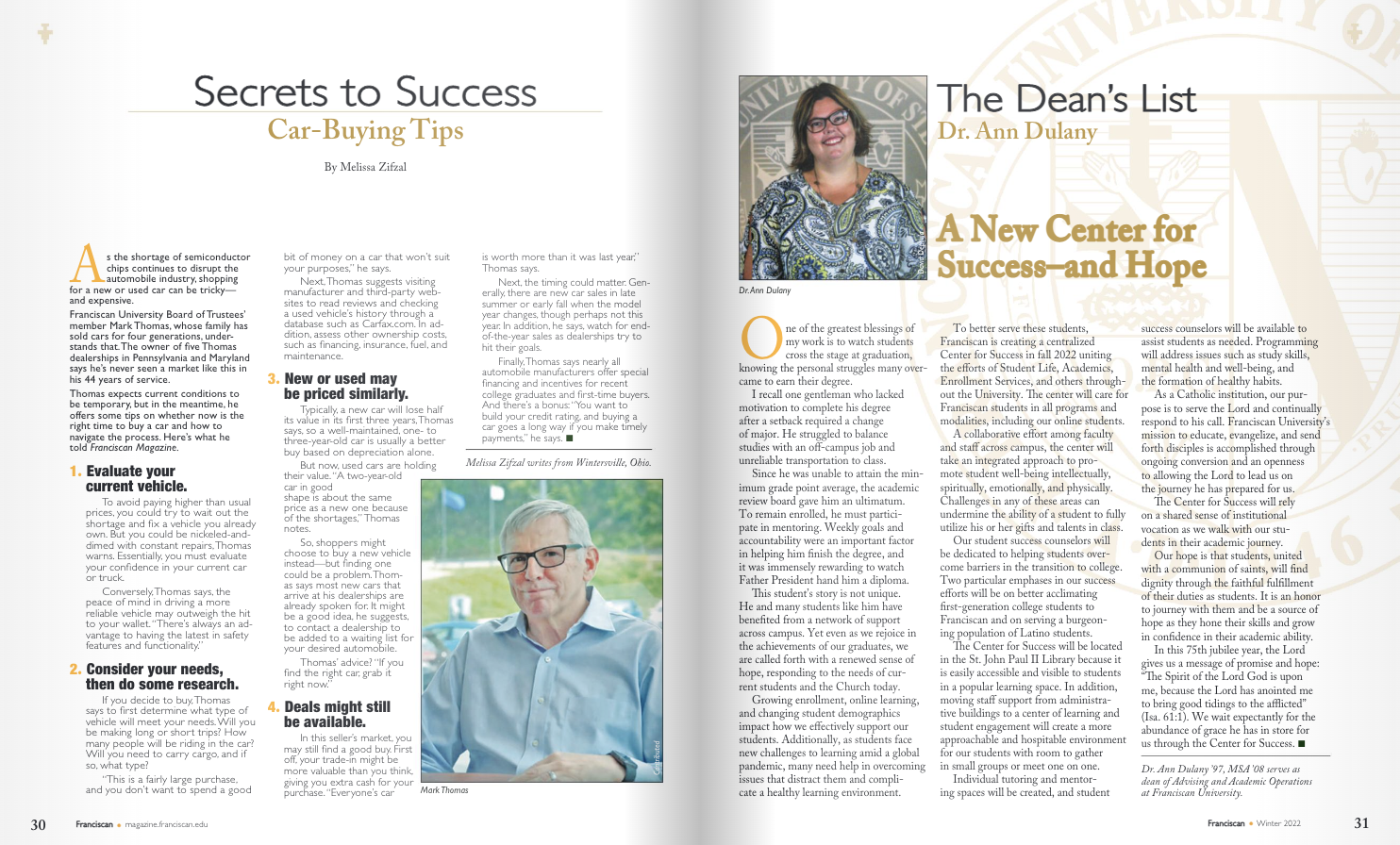

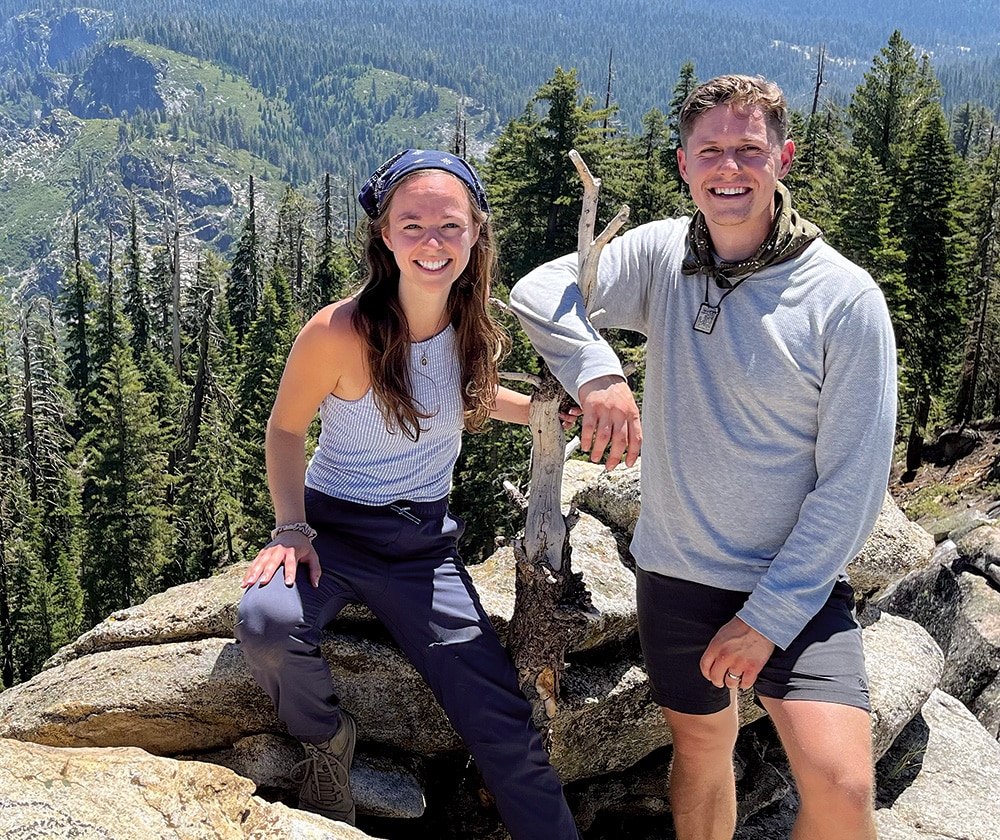
Michael ’20 and Helena (Stadnik ’19) Araps love the outdoors, so much so that they chose a backpacking adventure in Yosemite for their honeymoon. Their mutual support and encouragement throughout the struggles of backpacking really set the tone for their marriage.
“At the end,” Helena says, “it felt as though we had died and were resurrected.”
From that and their trips over the years, they’ve learned a few tips that allow them to be rejuvenated in God’s creation—even while living out of a backpack.
1. Research.
Michael says, “Allow for an adventure and unexpected things to happen—but don’t let those things be dangerous.” When you’re backpacking, you’re leaving the structure of modern life and entering into the wildness of nature. Prepare by taking note of the average weather of your destination, local flora and fauna, and common trouble spots. Helena says she wished she knew poison oak grew on the trails they hiked in Yosemite, as that knowledge would have spared her an itchy few days.
Depending on the duration of your trip, take note of nearby towns and places to stock up on food or equipment. Understanding your destination’s climate will also guide you to pack specific gear.
2. Prep your body and know your limits.
Going on hikes for a few months before your trip is crucial to gradually strengthening your body. “Approach it the same way you’d approach weight training or another sport,” Michael says. While still in Ohio, they started with 3- to 10-mile day hikes, finding nearby trails with the highest elevation to prepare for the altitude difference they’d encounter in Yosemite.
During a steady prep time, you can also break in new shoes or boots, get used to what it feels like to hike in the rain or sun, and add false weight to your pack. Being aware of your body and limitations will help you plan how many miles a day you can hike. If you aren’t able to travel to local trails, no worries! Michael says an older friend prepped to hike the Appalachian Trail by walking on his treadmill for up to 20 miles a day at the maximum incline.
3. The best equipment is the equipment you already have.
The backpacking market is saturated with gear, but Michael and Helena recommend going through your own closet before heading to the store.
“Pack layers,” Helena says. Layers are great for warmth, protection from bugs and sun exposure, and even staying cool. On their preparatory hikes, they wear the clothes they plan to travel in. She also recommends natural fibers such as cotton, linen, and wool above synthetic materials.
Michael recommends a backpack with hip pads for walking with heavier weight. He packs bulkier and less-accessed things at the bottom (sleeping bags, clothes), food near the middle, and frequently used items near the top (extra socks, hatchet, flint and steel). “You should not be overnight camping if you don’t own a flashlight,” he adds.
4. Water, fire, food, and shelter.
The essentials can be whittled down to just a few things—but they are critical.
A campfire kindled with matches, a lighter, or flint and steel keeps you warm and can purify drinking water. However, find out whether campfires are allowed where you’re backpacking, as dry conditions can lead to uncontrollable wildfires.
In addition to food, water, and a way to start a fire, you must have protection from the elements and for sleeping, such as a tarp or tent.
5. Unplug.
Michael and Helena love the outdoors because God’s creation is the most peaceful place they know. Helena says, “It’s a good reset for the mind, body, and spirit.” Not being around electronics and focusing on the hike enables them to enjoy nature and pray without distractions.
Michael also recommends journaling instead of taking photos. Notes about what is going well on the trip, what isn’t, and all the beautiful things seen along the way challenge backpackers to preserve their memories differently.